Jojoba Oil Benefits for Skin: How to Use, Where to Buy + DIY Recipes!

Jojoba oil is a lightweight, silky ingredient that helps moisturize and soften skin and works beautifully in all kinds of DIY recipes. Today we're going to dive into all of the Jojoba Oil Benefits for Skin, plus what it can and can't do!
Technically Jojoba Oil is not an oil but a liquid wax ester. Because Jojoba Oil contains very few triglycerides and is actually made up of esters and long chain fatty acids, it appears like an oil but behaves like a wax.
Jojoba oil is light and naturally resistant to going rancid, and it contains small amounts of natural antioxidants like vitamin E. It isn't a cleanser or an antibacterial treatment, but it makes a lovely, comfortable base for DIY skincare.
It is the perfect oil to add to your skincare routine if you are looking for an ingredient that balances moisturizing and skin healing!
Keep Reading to Learn all about the Jojoba Oil Benefits for Skin and how to use it in your skincare routine.
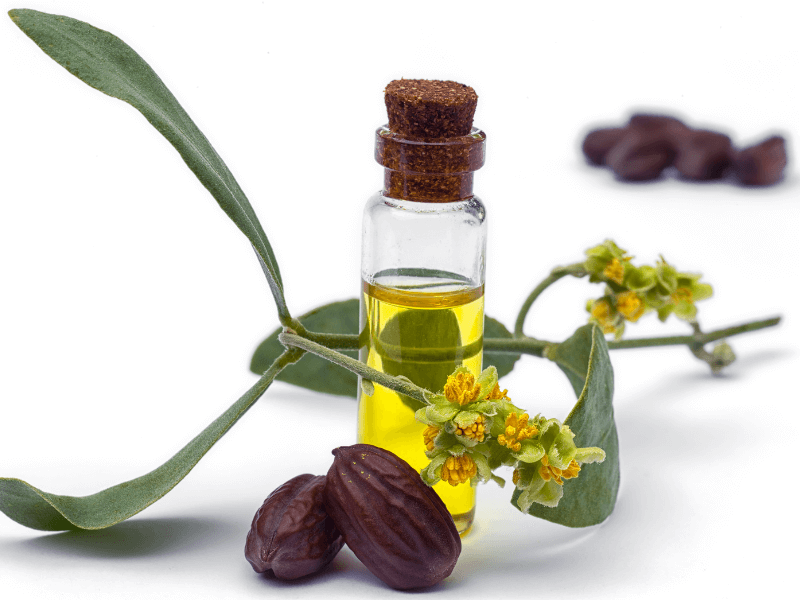
Jojoba Oil for Skin Quick Facts
| Jojoba Oil Scientific Name: |
| The scientific name for jojoba oil is Simmondsia chinensis. |
| Jojoba Oil Comedogenic Rating: |
| The comedogenic rating for jojoba oil is commonly listed as 2 on the 0-5 scale, which is considered low to moderate. Ratings are a helpful guide, not a guarantee. How a finished product behaves depends on the whole formula and your own skin. |
| Jojoba Oil Extraction Method: |
| Jojoba oil is extracted from the seed of the jojoba bush. The oil is extracted through the mechanical pressing of the seeds. |
| Jojoba Oil INCI Name: |
| Simmondsia Chinensis (Jojoba) Seed Oil |
| Jojoba Oil COSING Number: |
| 58617 |
| Jojoba Oil Skincare Recommendations: |
| Jojoba oil is a popular choice for many skin types, including dry, combination, and oily skin, and many people with sensitive or acne-prone skin tolerate it well. As with any natural ingredient, individual tolerance varies, so it's worth patch testing first. |
| Jojoba Oil Absorption Rating: |
| Jojoba oil spreads easily and feels light and silky rather than greasy. How quickly it seems to 'absorb' depends on how much you use and your skin, so start with just a few drops. |
Jojoba Oil Composition: Fatty Acid Profile
| 11-Eicosenoic acid (C20:1) | 76.7% |
| Erucic Acid (C22:1) | 12.1% |
| Oleic Acid (C18:1, ⍵-9) | 9.3% |
| Nervonic Acid (C24:1) | 1.0% |
| Palmitic Acid (C16:0) | 0.3% |
| Palmitoleic Acid (C16:1) | 0.3% |
| Stearic Acid (C18:0) | 0.2% |
| Lignoceric Acid (C24:0) | 0.1% |
Jojoba oil is made of wax esters, a fatty acid joined to a fatty alcohol, so this table shows only the fatty-acid side of those esters.
What is Jojoba Oil?

Jojoba oil isn’t actually an oil, it is a liquid wax that is produced from processing the seeds of the jojoba shrub that is native to Arizona and California.
One of the best things about jojoba is how stable it is. Because it's made of wax esters instead of triglycerides, it's far more resistant to going rancid than most plant oils, which makes it a handy oil to blend with less stable ones in a recipe. It isn't immortal, though. Keep it tightly capped in a cool, dark spot, check your supplier's best-by date, and toss it if it ever smells off.
Because Jojoba Oil contains very few triglycerides and is actually made up of esters and long chain fatty acids, it appears like an oil but behaves like a wax.
Jojoba oil is a light, silky liquid wax that delivers comfortable, well-balanced moisture. Its wax esters are similar to those found in our skin's natural sebum, which is one reason many people find it a comfortable choice for oily and combination skin. It's similar to sebum, not identical, and it hasn't been shown to change how much oil your skin makes.
Jojoba oil naturally contains small amounts of vitamin E and other antioxidants. They help protect the oil itself from going rancid and may offer a little antioxidant support to your skin.
Jojoba Oil Benefits for Skin

Jojoba oil isn’t a skincare favorite by accident. It's a lightweight, long-lasting moisturizer that helps soften skin and reduce moisture loss, which can help skin look smoother and more supple.
Jojoba oil is an emollient that helps soften and comfort dry skin. Lab and animal studies suggest it may have mild soothing (anti-inflammatory) activity, but there isn't enough human evidence to say it treats inflammatory skin conditions like eczema or acne. If you're dealing with one of those, check in with your dermatologist and think of jojoba as a moisturizing step, not a treatment.
By keeping skin soft and moisturized, jojoba oil can help fine lines and wrinkles look less noticeable.
Popular Jojoba Oil Uses for Skin

Jojoba oil is a popular oil in skincare; it can be used directly on the skin to provide moisture, cleansers to help clean skin, and make-up products to help reduce the appearance of fine lines and wrinkles.
Many people use jojoba oil as a makeup remover, including around the eyes. Just keep it out of your eyes, patch test first, and skip it if you wear contact lenses or notice any stinging, redness, or blurry vision. It's also popular in hair and scalp care as a lightweight conditioning oil. Jojoba hasn't been shown to regrow hair, but it makes a nice scalp-massage oil and conditioner.
Jojoba oil is also a great carrier oil to use with many essential oils to help pack your skincare routine with even more punch!
How to Use Jojoba Oil on Your Skin
After patch testing (see below), smooth a few drops over clean, slightly damp skin, either on its own or over a water-based serum. Follow with your usual moisturizer if you need more. A little goes a long way. If your skin feels greasy, use less. You can also use jojoba as a makeup remover, a carrier oil for essential oils, or an ingredient in DIY balms, serums, and cleansers.
Warnings/Contraindications for Jojoba Oil
Jojoba oil is generally well tolerated, but irritation and allergic reactions are possible with any plant-derived ingredient, and very sensitive or reactive skin should be extra careful. Patch test a small amount on your inner wrist or forearm for 24-48 hours before using it on your face, and stop using it if you notice redness, itching, or irritation.
Contact allergy to jojoba has been reported, so even if your skin is not usually sensitive, pay attention to how it responds.
Jojoba Oil Substitutes
Jojoba oil has a light, silky feel and is generally considered low on the comedogenic scale, so a few similar-feeling oils would be:
A quick note on swaps: these oils feel similarly light, but they aren't the same as jojoba. Jojoba is a liquid wax and is much more resistant to going rancid, while hemp seed, grapeseed, and pumpkin seed oils are more delicate. If you swap one in, store it cool and dark and plan to use it up sooner. Your finished recipe may also feel a little different on the skin.
If you would like more carrier oil ideas, you can download our Free Carrier Oil Cheat Sheet below. It will give you a quick overview of each carrier oil, benefits and skin type compatibility.
[cp_popup display="inline" style_id="11497" step_id = "1"][/cp_popup]
There are many online retailers that offer Jojoba Oil. I have also included a few of my favorite places to purchase Jojoba Oil.
Where to Buy Jojoba Oil

Jojoba Oil | Mountain Rose Herbs
Mountain Rose Herbs is committed to putting people, plants, and planet before profit with everything they do. They are committed to sustainability, and a certified Zero Waste company. They currently only offer shipping to the United States & Canada.


Golden Jojoba Organic Carrier Oil | New Directions Aromatics (CA)
New Directions Aromatics is a Canadian based company offering a wide variety of skincare and formulating supplies. They also offer a variety of Organic, Fair Trade & Ecocert Ingredients. They ship mainly to Canada & the US, but do offer International Shipping as well.

Jojoba Oil Golden Certified Organic | Soapmaker's Store (UK)
Based in the United Kingdom, Soapmakers Store is a family owned business specialising in the sourcing and supply of premium quality ingredients to the Cosmetic, Toiletry, Aromatherapy, and Soapmaking Industries. With over 40 years experience in the Natural Ingredients Industry, they will endeavour to be your 'one stop shop' for quality raw material supplies. They do offer shipping outside of Europe, but there will be additional charges.

Certified Organic Jojoba Oil | Pronounce Skincare
If you like to support small businesses, get your high quality Certified Organic Jojoba Oil from my friend, Jess over at Pronounce Skincare! (Ships Worldwide)
Now that you know all about Jojoba Oil Benefits for Skincare, you're probably ready to make some recipes.
Check out the skincare recipes below that all include jojoba oil as an ingredient!
Jojoba Oil Skincare Recipes
-
DIY Bronzing Body Lotion Bars for Dry Aging Skin
We’re ending summer and starting fall, which can only mean one thing. That summer tan will be fading soon! Who doesn’t love the way their skin looks with that sunkissed glow? If you’re looking for a natural way to keep that glow throughout winter, then I have a new recipe that will knock your socks...
-
The Best Epsom Salt Foot Bath Recipe
Being on your feet for long periods of time can leave them crying for some pampering. For me, long days at amusement parks or even just standing for long periods of time leaves my feet aching. Aside from having to rub or massage your feet, how do you get rid of that dull ache you're...
-
Baking Soda Free Deodorant Recipe for Sensitive Skin
Today we're tackling a gentle, natural deodorant recipe without baking soda that can be used on even the most sensitive skin! So if you're looking for a way to ditch the aluminum and other harsh chemicals in your current deodorant, but find that baking soda just doesn't work for you, give this fresh deodorant formula...
-
Best Soothing DIY Aftershave Balm for Sensitive Skin
Ahh, a fresh, smooth shave. There isn’t much that compares to a perfect shave, especially when you have an aftershave balm that helps soothe irritation and moisturize your skin, helping you get the most out of your shave! Aftershave balms are a wonderful way to help hydrate your skin after shaving and soothe any irritation!...
-
Best DIY Pre-Shave Oil for Sensitive Skin
Pre-shave oil is a great way to get the perfect shave! It helps to moisturize and protect your skin, while also reducing irritation. This diy pre-shave oil recipe only uses natural ingredients, so it's good for your skin! If you have sensitive skin like me, then I'm sure you've experienced razor burn and skin irritation....
-
9 DIY Avocado Hair Mask Treatments for Deep Conditioning & Hair Growth
Avocados are a great source of nutrients for your hair, and they make for a key ingredient in hair masks. There are many different DIY avocado hair mask treatments that you can try, and they all have different benefits. Whether you're looking to repair damage, address hair loss, or just nourish your hair, this list of...


Jojoba Oil FAQs
Is jojoba oil really an oil?
Not technically. Most plant oils are made of triglycerides, but jojoba is a liquid wax made of wax esters (a fatty acid joined to a fatty alcohol). It looks and pours like an oil, which is why we call it one.
Does jojoba oil mimic or balance my skin's sebum?
Jojoba's wax esters are very similar to one of the components of sebum, but sebum is a mixture of several lipids, and jojoba isn't identical to it. It hasn't been shown to change how much oil your skin produces, so I'd think of jojoba as a comfortable, lightweight moisturizer rather than a sebum regulator.
Is jojoba oil good for acne-prone skin?
Many people with oily or acne-prone skin tolerate jojoba well, and it has a low to moderate comedogenic rating. An uncontrolled pilot study tested a clay and jojoba mask, so it can't tell us what jojoba alone does. Everyone's skin is different, so patch test first and stop if you notice new breakouts.
Does jojoba oil go rancid?
Jojoba is much more resistant to rancidity than most plant oils, but nothing lasts forever. Store it tightly capped in a cool, dark place, follow your supplier's best-by date, and replace it if it smells off.
Can I use jojoba oil on my face every day?
Many people do. Start with a patch test, use just a few drops, and cut back or stop if you notice redness, itching, or breakouts.
Pin Jojoba Oil Benefits for Skin!
I hope you've enjoyed learning all about the benefits of Jojoba Oil for your Skin. Be sure to pin this post for later!